

Behind the portal made of red sandstone, a modern glass entrance opens up access to a richly decorated Rococo interior. The Augustinian Church (Augustinerkirche) housed the Augustinian hermits, a mendicant order that has been based in Mainz since 1260, until the year 1802. Between 1768 and 1772, both the hall church and the monastery buildings were completely rebuilt. Since 1805, the episcopal seminary for priests has been located in the complex.
The extraordinary wealth of the church furnishing is thanks to the generous support of patrons. The Elector placed great importance on ensuring that no plain "farmers' church" was built in his residence city. The façade presents itself in the dynamic style of the Franconian Baroque and is adorned with a depiction of the Coronation of Mary, created by the Mainz sculptor Nikolaus Binterim.
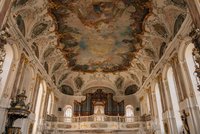
Inside, large-format, light-flooded ceiling frescoes by the painter Johann Baptist Enderle from Donauwörth depict the life of the Church Father Augustine. The organ with its characteristic central window was built in 1773 by Johann Heinrich Stumm and is one of the few surviving instruments from this renowned organ-building family. Between the southern side altars, there is a linden wood sculpture from the year 1420 in a niche: Mary with the playing Jesus child. With its cheerful expression, it is considered an outstanding example of Gothic art from the so-called "soft style." The highly esteemed image of grace was saved from the burning Liebfrauenkirche in 1793. An iconographic peculiarity is finally revealed in the high altar: At the death of Christ, God the Father symbolically tears up the "debt note of humanity" through a putto.
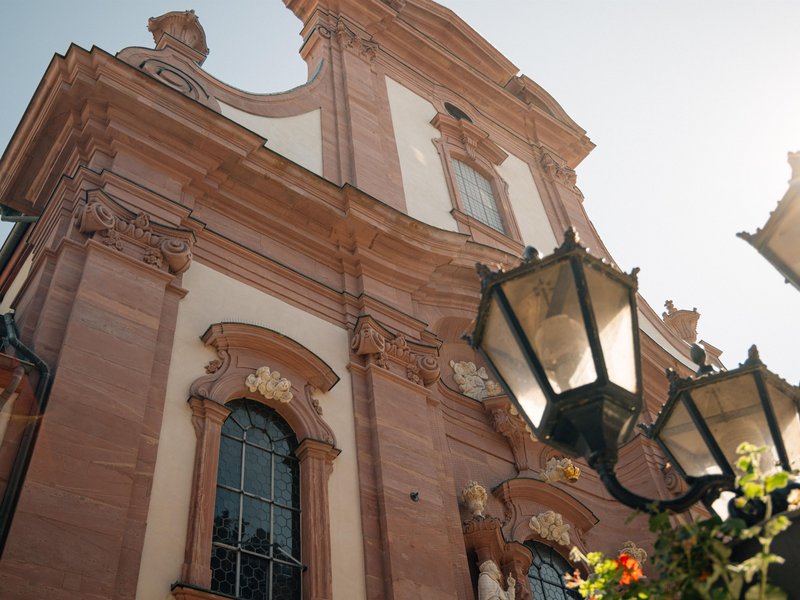
Außenansicht der Seminarkirche (Augustinerkirche)
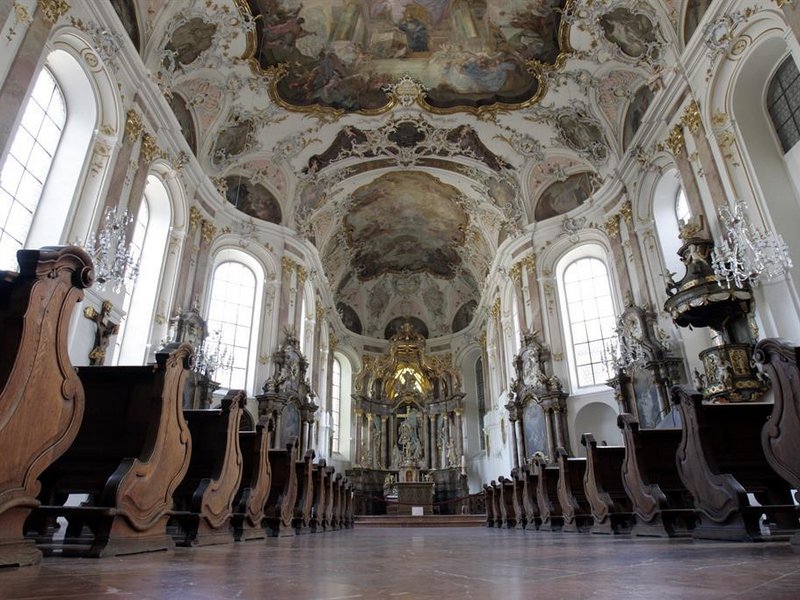
Innenansicht der Seminarkirche (Augustinerkirche)
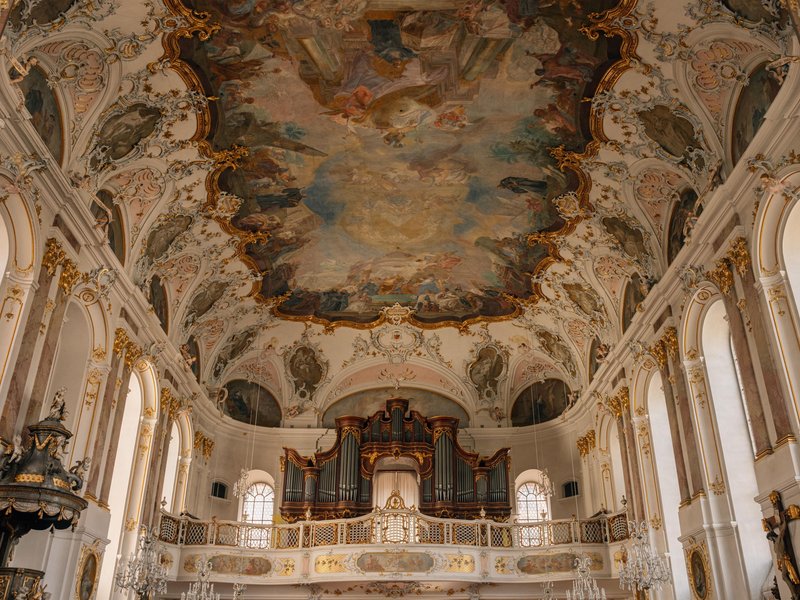
Deckenbild der Seminarkirche (Augustinerkirche)
Klicken Sie hier, um eine Karte von Google Maps zu laden. Dabei werden Daten an Google übertragen.
| Monday | 08:00-17:00 |
| Tuesday | 08:00-17:00 |
| Wednesday | 08:00-17:00 |
| Thursday | 08:00-17:00 |
| Friday | 08:00-17:00 |
| Saturday | 09:00-14:00 |